
 English


Views: 0 Author: Site Editor Publish Time: 2025-11-19 Origin: Site


Understanding a 7-pin trailer wiring diagram is essential for safe towing. Each wire on your trailer has a specific role, from powering turn signals to operating brake lights and tail lights. Misreading or connecting wires incorrectly can lead to partial lighting, non-functioning signals, or even short circuits. For beginners, these problems can be frustrating and potentially dangerous on the road. That’s why a clear understanding of wiring diagrams matters, and it can save time, money, and stress when troubleshooting trailer lights.
Many drivers face similar problems when their trailer lights fail. Turn signals might not flash correctly, brake lights can stay off, or tail lights may flicker. These issues are often caused by poor grounding, damaged connectors, or miswiring. Sometimes, the problem is not the trailer but the vehicle-side wiring. Identifying the source of the problem requires understanding which wire does what and how signals travel through the connector.
| Common Issue | Possible Cause | Quick Check |
|---|---|---|
| Left turn signal not working | Broken wire or bad connection | Test continuity with multimeter |
| Brake lights fail | Faulty brake signal or ground | Check trailer fuse and ground |
| Tail lights flicker | Loose connector or corroded pins | Inspect pins and clean contacts |
| Partial lighting | Grounding issue | Ensure all lights are properly grounded |
For reliable results, we recommend using YOUYE Electronics wiring harnesses. They provide durable, high-quality connectors and cables designed for long-term performance. Their products support a variety of vehicles and trailers, including those with electric brakes or additional lighting features. Using a well-made harness reduces the chance of wiring errors and ensures that all trailer lights function correctly. You can explore their full product range here.
This guide is designed for beginners and does not require any prior electrician experience. It uses clear diagrams, pin charts, and practical tips to make reading a 7-pin trailer wiring diagram straightforward. You’ll learn how to identify each wire, test signals safely, and connect your trailer without guesswork. Even if you have never worked with vehicle wiring before, following this guide will help you troubleshoot and install trailer lights safely and efficiently.
| Pin Color | Function | Notes |
|---|---|---|
| Brown | Tail/Running Lights | Test before final connection |
| Yellow | Left Turn / Brake | Connect securely to avoid flicker |
| Green | Right Turn / Brake | Confirm with multimeter |
| White | Ground | Must connect to bare metal surface |
| Blue | Electric Brakes | Only if trailer has brakes |
| Black | 12V Power | Optional for trailer accessories |
| Purple | Reverse Lights | Optional, not present on all trailers |
With proper understanding and quality products, reading and using a 7-pin trailer wiring diagram becomes simple. You can avoid common mistakes, ensure legal compliance on the road, and make towing safer for yourself and others.
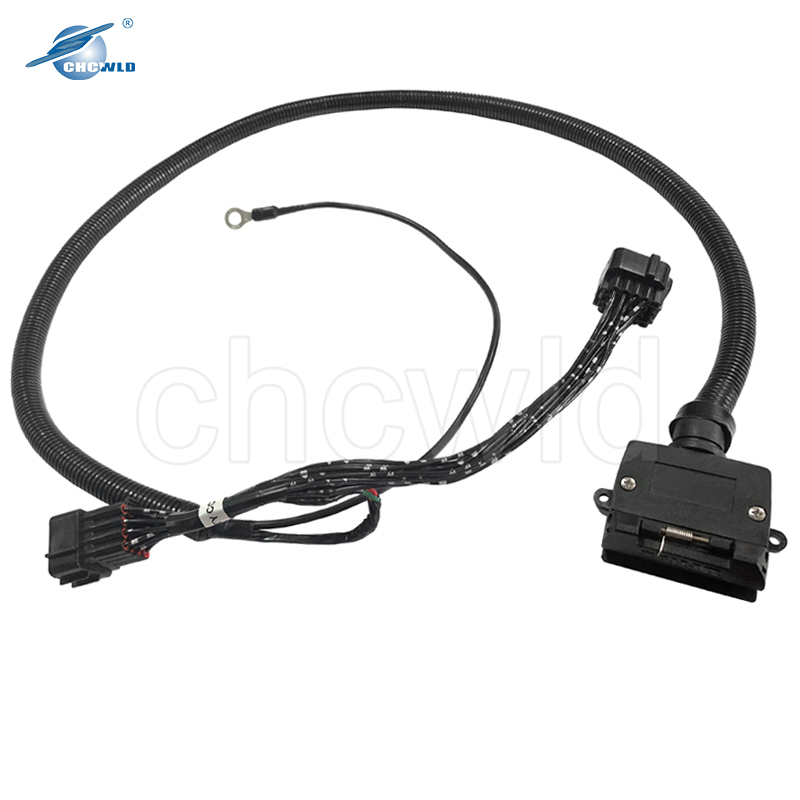
Understanding the 7-pin trailer wiring pinout is essential for safe towing. Each pin controls a specific function on your trailer, and wiring it incorrectly can lead to malfunctioning brake lights, turn signals, or auxiliary systems. The good news is, you don’t need to be an electrician to figure it out. A clear diagram makes it much easier to identify each wire, test connections, and ensure everything works properly. YOUYE Electronics offers high-quality, vehicle-specific harnesses that simplify installation and reduce wiring errors, saving time and avoiding costly repairs.
A 7-pin connector typically handles more than just lights. It can provide power for electric brakes, reverse lights, tail lights, and even auxiliary 12V systems. This extra functionality is what makes 7-pin connectors the standard for larger trailers, RVs, and towing setups that require reliable, multi-function wiring. Using a reliable, weatherproof harness from YOUYE Electronics ensures that all these systems function consistently, even in harsh conditions.
Here’s a standard 7-pin trailer wiring pinout table for reference:
| Pin Position | Wire Color | Function | Notes |
|---|---|---|---|
| 1 | White | Ground | Connect to trailer frame, ensure clean metal contact |
| 2 | Blue | Electric Brake | Powers trailer brakes via controller |
| 3 | Green | Right Turn/Brake | Combined signal for right indicator and brake light |
| 4 | Black | 12V Battery | Supplies auxiliary power, lights, winch, etc. |
| 5 | Yellow | Left Turn/Brake | Combined signal for left indicator and brake light |
| 6 | Brown | Tail/Marker Lights | Running lights, side markers, license plate |
| 7 | Purple | Reverse Lights | Optional, powers trailer backup lights |
It’s important to note that wire colors may vary depending on manufacturer, so always test each connection with a circuit tester before final installation. YOUYE Electronics harnesses are pre-labeled and vehicle-specific, reducing the guesswork and ensuring compatibility. Even if your trailer has extra accessories or additional lights, a quality 7-pin harness from YOUYE can handle the load safely.
Many beginners get confused because they see multiple wires and don’t know which goes where. Start by identifying the ground wire, then connect the turn signals and brake lights. Next, attach tail lights and any auxiliary circuits. Using a clear diagram, like the one YOUYE provides, can prevent common problems such as flickering lights, non-functioning signals, or blown fuses. This approach saves time and avoids frustration during installation.
Trailer connectors come in different types depending on the trailer’s size and electrical requirements. Choosing the right connector ensures your trailer lights, brakes, and auxiliary systems work reliably. While it may seem complicated at first, once you understand the differences, selecting or installing the right connector becomes straightforward. YOUYE Electronics offers high-quality connectors designed for all trailer types, with color-coded wiring and corrosion-resistant materials for hassle-free installation.
4-pin connectors handle basic lighting functions like tail lights, brake lights, and left/right turn signals. They are the most common for small, standard trailers. Many older or lightweight trailers use this type because it covers essential lighting requirements without extra functions. The flat design makes it easy to plug in and remove, and it’s often compact enough to store in the vehicle when not towing. While simple, 4-pin connectors can be adapted to larger systems using adapters, making them flexible for light-duty towing.
| Pin | Color | Function |
|---|---|---|
| 1 | White | Ground |
| 2 | Yellow | Left Turn/Brake |
| 3 | Green | Right Turn/Brake |
| 4 | Brown | Tail/Running Lights |
5-pin connectors add an extra pin for backup lock, auxiliary function, or hydraulic brakes. This extra pin is particularly useful for trailers with brakes or additional features. They still maintain all the basic lighting functions of a 4-pin connector, so a 4-pin adapter can be used if needed. YOUYE Electronics provides 5-pin harnesses that are clearly labeled and designed for easy installation, so even beginners can wire them correctly without guessing or testing each connection manually.
6-pin connectors add two additional functions: electric brakes and a 12V auxiliary power line. This makes them ideal for RVs, campers, and larger trailers needing more complex systems. Electric brakes ensure safe stopping for heavier loads, while the 12V power can run interior trailer lights or other accessories. YOUYE Electronics offers 6-pin harnesses that are vehicle-specific, color-coded, and weatherproof, reducing the risk of short circuits or corrosion over time. Installation becomes faster and much more reliable.
7-pin connectors are the standard for trucks and SUVs equipped with towing packages. They include all basic lighting plus electric brakes, 12V auxiliary power, and reverse lights. You’ll find two types: flat blade or round pins, depending on your vehicle and trailer setup. A high-quality 7-pin harness from YOUYE Electronics supports all pin types, offers clear color-coded wiring, and is corrosion-resistant. They simplify installation, prevent errors, and ensure that your trailer functions safely every time you tow.
| Pin Type | Common Functions | Notes |
|---|---|---|
| Flat Blade | Tail, Turn, Brake, Electric Brakes, 12V Power, Reverse | Compact, easy to store |
| Round | Same as Flat | Often used on older RVs or specialty trailers |

Understanding the components of a 7-pin trailer wiring diagram is essential for safe towing. Each pin serves a specific function, powering different trailer systems. If you misconnect a pin, lights or brakes might fail, which can create dangerous situations. YOUYE Electronics offers high-quality, clearly labeled wiring harnesses that simplify this process, making it easy for beginners to install without any electrical experience.
Each pin in a 7-pin connector has a dedicated purpose. While most manufacturers follow a similar color code, it’s not universal. Always test each wire using a multimeter before connecting. Here’s a quick reference table showing typical functions and wire colors:
| Pin | Function | Typical Wire Color |
|---|---|---|
| 1 | Tail / Running Lights | Brown |
| 2 | Left Turn / Brake | Yellow |
| 3 | Ground | White |
| 4 | Right Turn / Brake | Green |
| 5 | Electric Brakes | Blue |
| 6 | 12V Battery / Auxiliary Power | Black |
| 7 | Reverse / Back-up Lights | Purple |
Tip: Colors may vary. Don’t rely on color alone.
YOUYE Advantage: Standard labeling and clear color coding help prevent wiring mistakes and ensure consistent performance.
This setup allows trailers to operate tail lights, turn signals, brake lights, electric brakes, auxiliary power, and reverse lights safely. Understanding each pin’s role makes reading diagrams easier and reduces installation errors.
It’s important to distinguish between vehicle-side and trailer-side connections. The vehicle-side usually taps into your car or truck’s electrical system, while the trailer-side distributes power to the lights, brakes, and accessories. Grounding plays a crucial role here—every trailer light and connector must have a secure connection to the bare metal frame. Poor grounding causes flickering or non-functioning lights.
YOUYE Advantage: Our harnesses come with dedicated ground wires for both vehicle and trailer sides. This ensures stable grounding, minimizes signal loss, and provides reliable performance across all trailer systems.
Installation tip: Always attach the ground wire to clean, unpainted metal surfaces. Dirt, rust, or paint can interfere with the connection.
Properly understanding these components makes the diagram readable and installation straightforward. YOUYE’s clear labeling, color-coded wires, and pre-configured ground paths simplify the process, even for beginners tackling a 7-pin trailer wiring harness for the first time.
Reading a 7-pin trailer wiring diagram might seem tricky at first, but following a step-by-step approach makes it manageable. Even beginners can handle this without electrical experience. YOUYE Electronics provides high-quality, plug-and-play T-One compatible harnesses that simplify installation and reduce errors. Here’s how to approach it confidently.
The first step is finding the wiring diagram in your vehicle or trailer manual. Most modern trucks and SUVs include a detailed diagram in the owner’s manual or towing section. If unavailable, you can usually find diagrams online for your make and model. This diagram is your roadmap, showing each pin’s location and function, so don’t skip this step.
Next, identify each of the seven pins. A standard setup includes tail lights, left and right turn signals, brake lights, electric brakes, 12V auxiliary power, and reverse lights. Use a reference table to cross-check functions:
| Pin | Function | Typical Wire Color |
|---|---|---|
| 1 | Tail / Running Lights | Brown |
| 2 | Left Turn / Brake | Yellow |
| 3 | Ground | White |
| 4 | Right Turn / Brake | Green |
| 5 | Electric Brakes | Blue |
| 6 | 12V Battery / Auxiliary | Black |
| 7 | Reverse / Backup Lights | Purple |
Tip: Wire colors may differ by manufacturer. Always verify with a multimeter.
Colors are a helpful guide, but testing ensures accuracy. Use a multimeter to confirm voltage and continuity for each wire. Turn on your vehicle’s lights, hazards, or brakes, and check signals at the connector. This step prevents miswiring and potential damage to trailer electronics.
Follow each wire from the connector to its endpoint—tail lights, brake lights, or electric brakes. Look for frayed wires, loose connections, or corrosion. Visual tracing helps spot potential issues before installation, ensuring signals reach the intended devices reliably.
Grounding is critical. Attach all ground wires to bare metal on both the vehicle and trailer frame. Poor grounding causes flickering or non-functioning lights. YOUYE harnesses come with dedicated ground wires, ensuring stable grounding and consistent electrical performance across the trailer.
Finally, use a T-One plug-and-play connector or a hardwire kit to connect the trailer. These systems simplify installation, avoid cutting factory wires, and prevent mistakes.
YOUYE Advantage: Their T-One compatible harnesses are ready to install, color-coded, and designed for direct vehicle fit. No splicing or guesswork is needed, making the installation fast, clean, and reliable.
Following these steps allows even first-time users to understand a 7-pin trailer wiring diagram, ensuring trailer lights and brakes operate correctly.
Installing a 7-pin trailer wiring harness doesn’t have to be intimidating. Even beginners can handle it with the right guide and tools. Proper installation ensures all trailer lights, brake systems, and auxiliary functions work correctly. YOUYE Electronics provides high-quality harnesses, making installation faster, safer, and more reliable.
T-One connectors are a plug-and-play solution. They fit directly into the factory wiring harness, avoiding any splicing or cutting. Most T-One connectors are installed at the tail light area or a vehicle-specific plug location, depending on the model.
Advantages of T-One connectors:
No modification of factory wires needed.
Color-coded for easy identification.
Quick installation in 10–20 minutes.
| Feature | Benefit |
|---|---|
| Plug directly into factory harness | Eliminates cutting or splicing |
| Vehicle-specific design | Fits exact make and model |
| Pre-labeled wires | Reduces installation errors |
For vehicles lacking T-One plugs, custom hardwire kits are ideal. These kits use quick-connect terminals to attach the harness to existing vehicle wiring. They work for both 3-wire brake systems and multi-wire systems found in modern vehicles.
Step-by-step for hardwire installation:
Identify correct vehicle wires using a multimeter.
Match harness wires to corresponding vehicle circuits.
Attach harness wires securely with quick-connect terminals.
Check each function: turn signals, brake lights, tail lights, and auxiliary circuits.
Using a multimeter ensures accuracy and prevents miswiring that could damage electrical components.
Proper placement of wires is critical. Avoid pinch points near suspension components, tail lights, or moving parts. Mounting brackets prevent connectors from dangling, reducing wear and exposure to road debris.
YOUYE Advantage: All harnesses include protective design features, mounting hardware, and weather-resistant materials. They ensure wires remain secure and functional, even in harsh conditions, extending the life of your trailer wiring.
| Protection Tip | Recommendation |
|---|---|
| Avoid pinch points | Route wires over suspension or frame safely |
| Connector stability | Use included brackets and clips |
| Weather resistance | Use YOUYE harnesses for sealed, durable connectors |
Properly installing a 7-pin trailer wiring harness ensures your trailer operates safely and reliably on the road.
When your trailer lights do not function correctly, it can cause serious safety issues. Common problems include turn signals not flashing, brake lights failing to illuminate, or tail lights not working. These issues often arise from poor grounding, loose connections, or damaged wires. Even a single disconnected wire can prevent the entire circuit from working. Always start troubleshooting by visually inspecting both vehicle and trailer connectors. Ensure all pins are fully seated and free of corrosion or debris. YOUYE Electronics harnesses are designed with corrosion-resistant connectors and pre-labeled wires, making it easier to pinpoint problems quickly and reduce troubleshooting time.
Each pin in a 7-pin connector serves a specific function. Knowing which wire controls which light helps isolate issues faster. For example, if your left turn signal doesn’t work but the right one does, the problem is likely the yellow wire connected to the left turn/brake function. Using a multimeter to test voltage at each pin is the safest method to confirm signal presence.
| Pin | Function | Common Problem | Check Point |
|---|---|---|---|
| 1 | Tail/Running Lights | Lights dim or off | Brown wire and ground |
| 2 | Left Turn / Brake | Signal not flashing | Yellow wire connection |
| 3 | Ground | Multiple lights fail | White wire grounding |
| 4 | Right Turn / Brake | Right signal fails | Green wire connection |
| 5 | Electric Brakes | Brakes not activating | Blue wire to brake controller |
| 6 | 12V Aux Power | Accessories not powered | Black wire and fuse |
| 7 | Reverse / Backup | Trailer doesn’t move brake release | Purple wire signal |
Poor grounding is one of the most overlooked causes of trailer wiring problems. A single bad ground can make turn signals or brake lights fail intermittently. Always ensure that the trailer’s white ground wire is connected to a clean, unpainted metal surface on the trailer frame. Similarly, vehicle-side grounding must be solid to allow current to flow properly. YOUYE harnesses include dedicated ground wires for both vehicle and trailer, ensuring consistent performance and reducing potential issues caused by corroded or loose grounds.
Overloaded circuits or exposed wires can cause converters to fail or blow fuses. If you add extra lights, accessories, or brake systems, ensure your wiring can handle the load. Water intrusion in connectors, frayed insulation, or wires rubbing against metal can all create shorts. YOUYE wiring harnesses feature weatherproof connections and protective sleeves that reduce exposure to moisture and abrasion. Regularly inspecting your harness can prevent unexpected failures and keep your trailer lights functioning reliably.
Trailer wiring problems can appear suddenly, even if everything worked fine before. A frequent issue is turn signals not working on one side while the other side functions normally. Tail lights or brake lights may flicker or fail completely. Electric brakes may not respond at all, creating safety hazards while towing. Partial lighting often points to grounding issues. These problems can frustrate any driver, especially without electrical experience. YOUYE Electronics offers high-quality, vehicle-specific harnesses that simplify troubleshooting by providing color-coded wires and reliable connectors. Using a good harness reduces the likelihood of shorts, corrosion, or loose connections.
When tackling wiring issues, a systematic approach saves time and prevents further damage. Start by checking your vehicle’s fuses and signal outputs. Next, inspect the trailer connector for corrosion, bent pins, or damaged insulation. Verify grounding on both the vehicle and trailer. Testing each pin with a multimeter confirms the presence of voltage and signal continuity. Finally, replace defective connectors or consider upgrading to a high-quality harness, such as those from YOUYE, which include pre-labeled pins and protective design for easier installation.
| Step | Action | Tip |
|---|---|---|
| 1 | Check vehicle fuses | Ensure correct amperage and no blown fuses |
| 2 | Inspect trailer connector | Look for corrosion, bent pins, or debris |
| 3 | Verify grounding | Connect to clean, bare metal frame |
| 4 | Test pins | Use multimeter for voltage and continuity |
| 5 | Replace or upgrade harness | Consider YOUYE plug-and-play harnesses |
Proper grounding is crucial for reliable trailer lighting. Always connect the ground wire to a clean, bare metal surface on the trailer frame. Some trailers run separate ground wires to each light, while others rely on mounting bolts to complete the circuit. Trailers with pivoting cargo beds may need ground wires routed around pivot points to avoid intermittent contact. Poor grounding often causes flickering lights or partial function, so checking and securing grounds is one of the first steps in troubleshooting. YOUYE harnesses come with dedicated ground wires and secure connectors to maintain consistent performance and reduce common grounding issues.
When towing, trailer lights must meet strict legal standards. Tail lights, brake lights, and left/right turn signals are mandatory in almost every jurisdiction. Missing or malfunctioning lights can result in traffic fines or even vehicle impoundment. They also create serious safety hazards, increasing the risk of rear-end collisions. Many drivers underestimate the importance of proper wiring. YOUYE Electronics designs harnesses that meet legal requirements, ensuring all lighting functions operate correctly. Their products are engineered for trucks, SUVs, and trailers, making it easier for drivers to stay compliant without guesswork.
Faulty trailer wiring can cause a variety of problems. Lights may flicker, fail completely, or even trigger false signals. Brake lights not working can lead to rear-end accidents. Turn signals failing can confuse other drivers, creating dangerous situations. Electrical shorts or poor grounding may also damage the vehicle’s circuits. It’s important to inspect and maintain the wiring regularly. YOUYE harnesses include pre-labeled, color-coded wires and corrosion-resistant connectors. This reduces the risk of wiring errors, ensuring safety on the road and preventing costly fines.
| Common Issue | Potential Consequence | YOUYE Solution |
|---|---|---|
| Tail lights out | Legal violation, accident risk | Reliable, pre-tested harness |
| Turn signals fail | Miscommunication with drivers | Color-coded, easy-install connectors |
| Brake lights fail | Rear-end collisions | Dedicated brake signal wires |
| Shorts/corrosion | Vehicle electrical damage | Weatherproof and corrosion-resistant design |
Choosing the right trailer wiring harness matters for both safety and compliance. YOUYE Electronics tests all harnesses to ensure they function reliably under extreme conditions. Their weatherproof design protects against rain, snow, and road debris. They also provide harnesses compatible with a wide range of vehicles, from compact SUVs to heavy-duty trucks. Color-coded and labeled connectors simplify installation for beginners. Drivers can tow with confidence knowing that their trailer wiring meets legal standards and performs safely, even on long trips or in challenging conditions.
Reading a 7-pin trailer wiring diagram is essential for safe towing. It helps prevent common issues like turn signal failure, brake lights not working, and partial lighting caused by grounding problems. Proper grounding and secure connections on both the vehicle and trailer ensure that all electrical functions operate reliably. YOUYE Electronics provides high-quality, color-coded trailer wiring harnesses that simplify installation and reduce errors. Their products are weatherproof, compatible with all pin types, and designed to maintain reliable performance over time. Using a Trailer wire harness from YOUYE Electronics ensures trailers meet legal lighting requirements and operate safely under all conditions, giving peace of mind during every trip.
A: Locate the diagram in your vehicle or trailer manual. Identify each pin, match wire colors or verify with a multimeter, trace wires to lights or brakes, and ensure proper grounding on vehicle and trailer.
A: 4-pin for basic lights, 5-pin adds backup or auxiliary, 6-pin adds electric brakes and 12V power, 7-pin for full functions including reverse lights and electric brakes.
A: Turn signals failing on one side, brake or tail lights malfunctioning, electric brakes unresponsive, or partial lighting due to poor grounding.
A: YOUYE harnesses are color-coded, weatherproof, T-One compatible, easy to install, reduce errors, and meet legal lighting requirements.
A: Multimeter for verifying signals, T-One connectors or hardwire kits for easy installation, and proper grounding points for reliable operation.
A: It ensures all lights and brakes function correctly, prevents partial lighting, and avoids shorts or wiring failures.
A: They help connect 4-pin to 5, 6, or 7-pin trailers, convert 3-wire brake systems, and handle heavy-load trailers safely.