
 English


Views: 0 Author: Site Editor Publish Time: 2026-02-18 Origin: Site


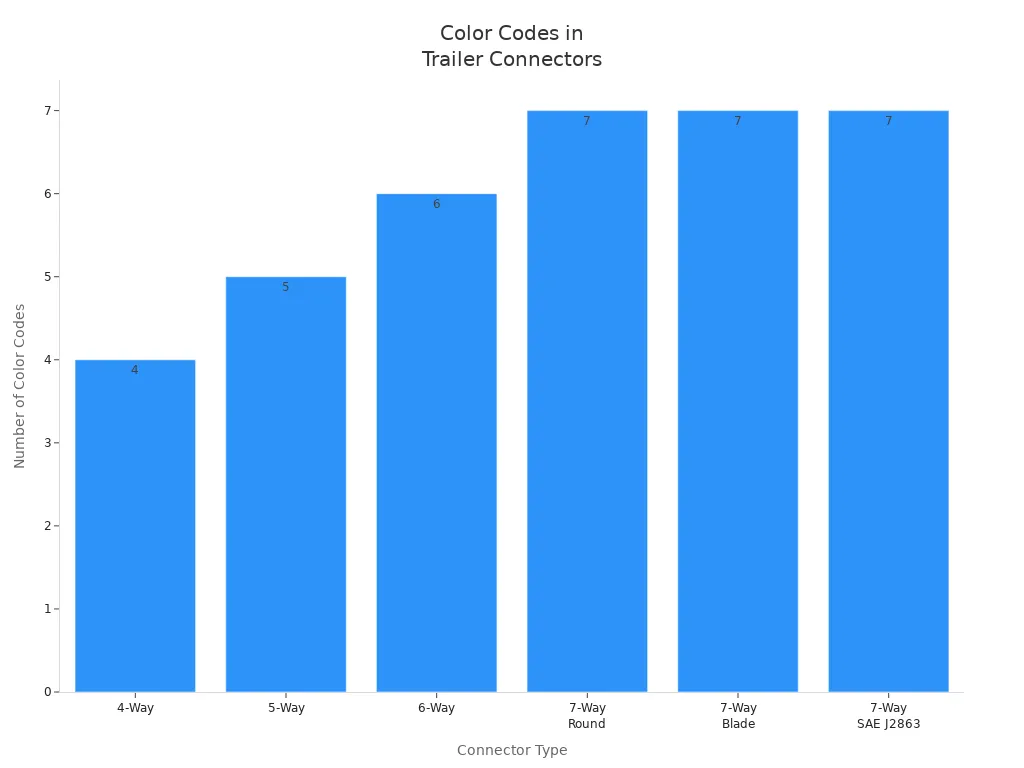
Connector Type | Color Codes | Functions |
|---|---|---|
4-Way | White, Brown, Yellow, Green | Ground, Taillights, Left/Right Brake Lights |
5-Way | White, Brown, Yellow, Green, Blue | Ground, Taillights, Left/Right Brake Lights, Electric Trailer Brakes |
6-Way | White, Brown, Yellow, Green, Red/Black, Blue | Ground, Taillights, Left/Right Brake Lights, 12v Auxiliary Power, Electric Trailer Brakes |
7-Way Round | White, Brown, Yellow, Green, Blue, Red, Black | Ground, Taillights, Left/Right Brake Lights, Electric Trailer Brakes, 12v Battery Power, Reverse Lights |
7-Way Blade | White, Brown, Red, Yellow, Green, Black, Blue | Ground, Right Turn Signal, Left Turn Signal, Backup Lights, Taillights, 12v Battery Power, Electric Trailer Brakes |
7-Way SAE J2863 | Brown, Yellow, White, Blue, Green, Orange, Grey | Taillights, Left Turn Signal, Ground, Electric Trailer Brakes, Right Turn Signal, 12v Battery Power, Reverse Lights |
Follow instructions from trusted sources to avoid mistakes. The RP-704C guidelines, the Society of Automotive Engineers, and the Truck Trailer Manufacturers Association give these best tips:
Use good wire harness parts.
Make the system strong and reliable.
Install everything as a whole system.
You can feel sure when you work on trailer wiring. This is true if you are new or have done it for years.
Always look at your trailer wire harness before each trip. This easy step helps you find problems early. It also keeps towing safe.
Use the right wire gauge for your trailer. The correct thickness stops wires from getting too hot. It also makes sure your trailer works well.
Make sure all connections are tight. Loose connectors can make lights blink or stop working. They can also cause electrical problems.
Keep your trailer wiring safe from weather. Cover connections to keep out water and dirt. This helps stop rust and other electrical problems.
Check your trailer often. Regular checks help keep your trailer safe. They also make sure it works well on the road.
You need a strong ground connection for your trailer wire harness to work well. The ground wire, usually white, connects to the trailer frame. This wire gives extra electrical charges a safe path to escape. It protects you from electric shock and lowers the risk of fire.
Here are the standard color codes for trailer wiring:
White: Ground (chassis negative)
Brown: Taillights or running lights
Yellow: Left brake or turn signal
Green: Right brake or turn signal
Many problems start with the ground wire. You might see flickering lights or signals that do not work. These issues often come from:
Weak or loose wire-end connectors
Rust or debris at the ground connection
Corroded or bent connectors
A single ground wire that, if faulty, causes many electrical problems
If you do not connect the ground wire to a clean, unpainted metal surface, you can block current flow. Rust or looseness at the attachment point can make these problems worse.
You can fix most ground wire problems with a few simple steps. Manufacturers recommend that you:
Check for loose ground connections.
Tighten them so they hold firm.
Find the ground connection, usually bolted to the trailer frame.
Make sure the connection is clean and free of rust or corrosion.
Inspect the grounding every six months.
A loose ground acts like a weak handshake. It stops your trailer wire harness from sending signals the right way. Always follow the instructions from your trailer or wire harness manufacturer. This helps you avoid common mistakes and keeps your trailer safe on the road.
You need to pick the right wire gauge for your trailer wire harness. The wire gauge means the thickness of the wire. If you use a wire that is too thin, it can overheat and fail. If you use a wire that is too thick, it can be hard to install and cost more. Each connector type, like 4-way or 5-way, has different wiring needs. For example, a 4-way connector usually handles basic lights, while a 5-way or 7-way connector may power brakes or extra lights.
Here is a table to help you understand what to consider when choosing the right wire gauge:
Factor | Description |
|---|---|
Voltage | Most trailers use 12V DC. AC and DC need different wire sizes. |
Current | Add up the amps for all devices on the circuit. |
Wire Length | Longer wires need thicker gauges to carry power safely. |
Recommendations | Use 16 gauge for lights. Use 14 or 12 gauge for brakes or high power. |
If you tow in cold weather, you need to think about special wire harnesses. Cold can make regular cables stiff or brittle. Some cables, like the Grote Xtreme trailer cable, stay flexible in low temperatures. This helps you install the harness without cracks or breaks.
Tip: In freezing weather, always use cables made for cold climates. Regular wires can crack and cause downtime.
You can check your wire gauge with a few simple steps:
Find the highest amperage used by your trailer’s lights, brakes, or other devices.
Measure the total length of wire needed for the round trip from your vehicle to the trailer and back.
Choose a wire gauge that handles more amps than your trailer uses. This prevents overheating.
If you use your trailer in cold weather, check that your wire harness stays flexible and does not crack.
If you follow these steps, you keep your trailer wire harness safe and reliable. You also avoid common mistakes that can lead to electrical problems on the road.
It is important to keep your trailer wire harness safe from water, dirt, and salt. Bad weather can hurt wires and cause problems with electricity. Many people forget to weatherproof their trailer wire harness. This can make wires rust, cause shorts, or make trailer lights stop working.
You can stop these mistakes if you follow some easy tips:
Use heat shrink tubing, not electrical tape. Electrical tape can fall off or break in rain, snow, or sun.
Make drip loops in the wires. Drip loops help water drip away from the connections.
Put silicone-sealed junction boxes in important places. These boxes keep water and dirt out.
You should also use special things to protect your connections. Dielectric grease or silicone compound keeps water out and stops rust. Corrosion Block spray goes deep into connectors and gives strong protection for a long time.
Here is a table that shows the best ways to keep your trailer wire harness safe from water and rust:
Method | Description |
|---|---|
Sealed housing | Keeps water, dust, oil, and grease out of the connector. |
Proper terminal fit tolerance | Makes a tight fit for good electrical contact. |
Metal terminal material selection | Stops rust from salt, water, or different metals. |
Dielectric grease | Adds a layer to stop rust and keep trailer lights working. |
You need the right tools to keep your trailer wire harness safe in all kinds of weather. Different places and trailers need different things. For example, boat trailers get wet and salty, but utility trailers might sit in the sun for a long time.
Here is a table that shows what design features help with different weather problems:
Environmental Challenge | Recommended Design Feature |
|---|---|
Water and moisture | Use sealed connectors with o-rings to keep water out. |
UV/Sunlight exposure | Use cable jackets that block sun damage. |
Corrosive elements | Use tin-plated copper wires to stop rust from salt and chemicals. |
You can buy these tools at most auto parts stores. Always look at your trailer wire harness for cracks or worn spots before you travel. Good weatherproofing keeps your trailer safe and your lights working in any kind of weather.
You need secure connections for your trailer wire harness to work safely. Loose or weak connectors can cause lights to flicker or stop working. Many people make the same mistakes when installing their wiring. Here are the most frequent connection security errors:
Incorrect grounding. If you do not ground the system well, you may see flickering lights or signals that fail.
Poor wire protection. Wires left unprotected can get damaged by water, dirt, or road debris.
Incorrect wiring connections. If you mix up the brake, tail, or turn signal wires, your lights may not work as they should.
You can avoid these problems by following a few simple steps. Always make sure connectors are fully pushed together. Use a handheld wire brush or electrical cleaner to keep pins and sockets clean. If you see any damaged connectors, replace them right away. Keep your wiring off the ground and secure it to the trailer frame. This helps prevent pinched wires and keeps everything safe.
Tip: Disconnect plugs when you are not using your trailer. This helps stop corrosion and keeps your connections strong.
You should check your trailer wire harness before every trip. Regular inspections help you find small problems before they become big ones. Here is a simple routine you can follow:
Look for loose or damaged connectors.
Check that all wires are secure and not pinched.
Make sure connectors are clean and dry.
Store the harness in a safe place when not in use.
If you keep up with these checks, your trailer lights and signals will stay reliable. A good inspection routine gives you peace of mind and keeps your trailer safe on the road.
You should always test your trailer wire harness after you install it and before you start towing. Testing helps you stay safe on the road. It also keeps your trailer legal and working well. Here are some reasons why testing matters:
Working trailer lights help other drivers see you.
Lights and signals show your intentions and prevent accidents.
Proper testing helps you follow towing laws.
You can test your trailer wire harness with a few simple steps. Follow this checklist to make sure everything works:
Use the brake controller in your tow vehicle to check if the electric brakes work.
Turn on all lights and signals. Ask someone to stand behind the trailer and watch them.
Look for loose connectors, missing fuses, or weak ground wires.
Make sure all harness connectors are in the right place and fit tightly.
Check that the ground wire connects to a clean, unpainted spot on the trailer frame.
Tip: Always test your trailer wire harness before every trip. This habit helps you catch problems early.
If you find a problem, you can fix it by following these steps:
Look at all connections for damage or rust.
Use a multimeter to test if electricity flows through the wires.
Check for broken or worn parts.
Make sure the ground wire is clean and tight.
Start at the main connector and see if it fits well.
Test your tow vehicle to see if it sends the right signals.
Inspect the harness for any cuts or cracks.
Check bulbs and sockets to see if they are in place and not burned out.
Test each wire for continuity if you suspect a problem.
Damaged wires, weak connections, or overloaded harnesses can cause your system to fail. Weak ground wires often stop the whole system from working. Careful testing and troubleshooting keep your trailer safe and reliable.
You can avoid most trailer wire harness problems by checking a few key areas before every trip. A quick review helps you spot trouble early and keeps your trailer safe. Use this checklist to guide your inspection:
Function | OK? | Needs Fixing? |
|---|---|---|
Left Signal | ||
Right Signal | ||
Brake Lights | ||
Taillights |
Examine all visible trailer wiring for fraying, cuts, or pinching.
Ensure the connector plug is clean and free of corrosion.
Tug gently on each wire to check for looseness.
Regularly check wire harness connections between your tow vehicle and trailer.
Look for worn insulation or exposed wires to prevent short circuits.
Clean contacts to remove dirt or corrosion.
Inspect the trailer’s battery. Check the terminals for tightness and cleanliness. Make sure the battery stays charged above 12.4 volts.
Tip: A quick review before every trip can prevent most electrical failures and keep you safe on the road.
If you find a mistake during your inspection, take these steps to fix the problem:
Start with a visual inspection for any signs of damage, like frayed insulation or exposed wires.
Check that all plugs are fully seated and that pins are not bent or corroded.
Use a voltmeter to test connections while gently wiggling them to find loose spots.
Look under the trailer for wires that may be dragging or snagged.
Keep a maintenance log and take photos of any problem areas.
Replace any damaged connectors or wires right away.
Make sure the harness stays away from hot parts and moving pulleys.
If you find a serious defect, ask a professional to inspect your trailer before your next trip.
Keeping up with these action steps helps you catch small issues before they become big problems. Your trailer will stay reliable and ready for every journey.
You can stop lots of problems if you check your trailer wire harness before every trip. Simple mistakes can make wires touch by accident, break your lights, or stop your trailer brakes from working. These problems can make towing dangerous and make accidents more likely.
Bad wiring can make short circuits, lights that do not work, and trailer brakes that fail.
These problems make it harder to tow safely and can cause crashes.
Good connections are needed so your signals and lights work right.
Check your trailer with the checklist each time you travel. This easy step keeps your trailer safe and helps your trip go well.
You will find the ground wire is almost always white. This wire connects to the trailer frame. It gives a safe path for electricity to return to your vehicle.
You should check your trailer wire harness before every trip. Regular checks help you find loose wires, rust, or damage early.
You should not use electrical tape for long-term protection. It can peel off in rain or sun. Use heat shrink tubing or sealed connectors for better results.
Flickering lights often mean you have a loose ground wire or a weak connection. Clean the ground point and tighten all connectors to fix this problem.